Pilih jalurmu
Lebih spesifik
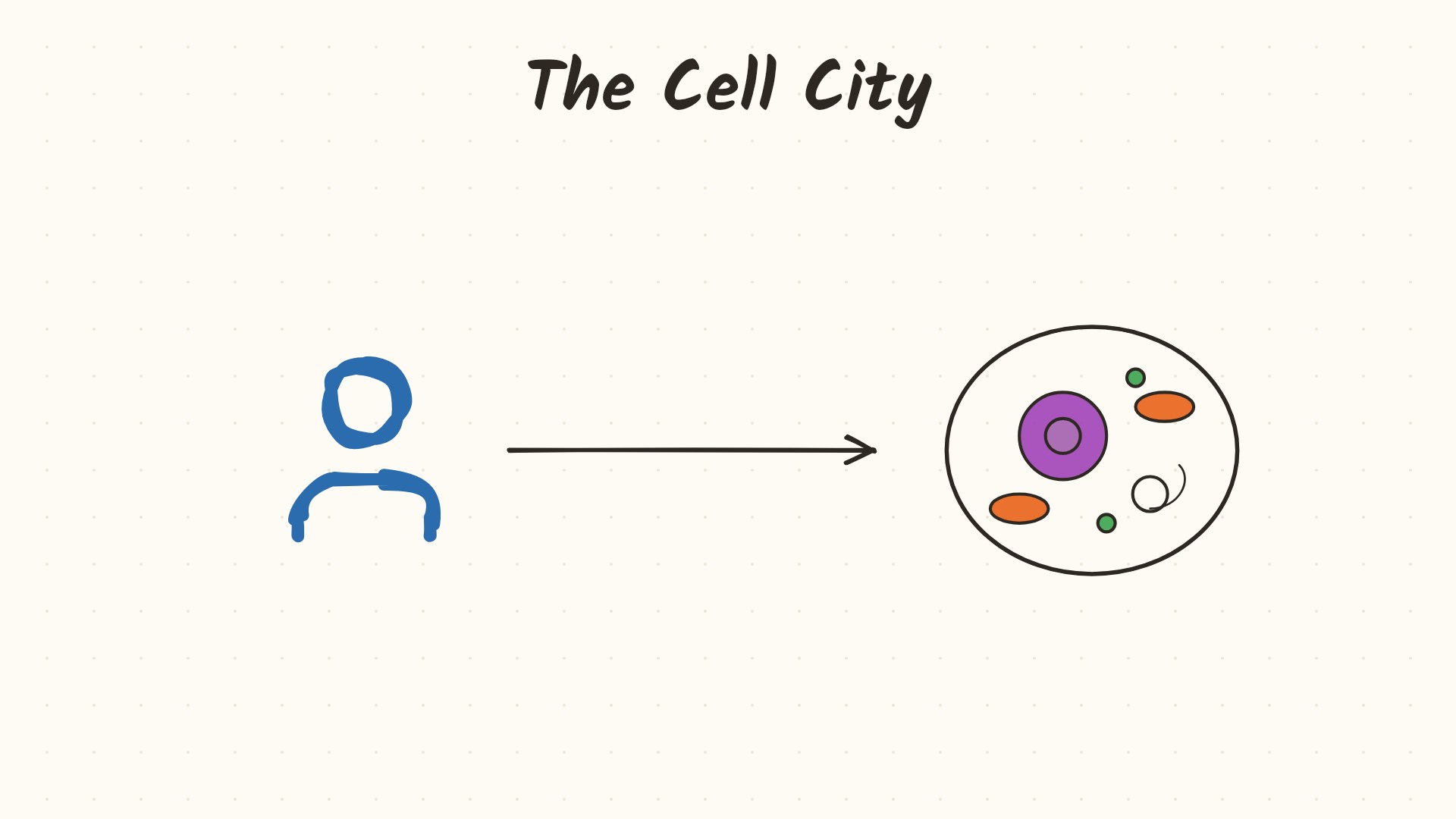
Imagine your body is a bustling metropolis. How does a microscopic blob called a cell run its own power plants and factories all at once?
Let's zoom into the center to find the nucleus. It acts exactly like City Hall, holding the master blueprint, your DNA, that dictates what to build.
To run this city, we need energy. Meet the mitochondria, the cell's power plant. It breaks down fuel to produce tiny battery packs called ATP.
Next, we have ribosomes, our manufacturing hubs. They act like tiny 3D printers, assembling raw building blocks into functional proteins.
After production, these proteins travel to the Golgi apparatus. Think of it as a post office, wrapping goods and attaching delivery tags for shipping.
For waste management, lysosomes step in as recycling trucks. They dissolve broken cell parts to reuse the base materials efficiently.
Here is a common trap: thinking the cell is just a loose water balloon. Not true! The cytoskeleton acts like steel girders, holding structures rigidly in place.
Finally, the cell membrane forms the outer border. It works like strict security guards, letting specific nutrients in while keeping dangerous toxins out.
To recap, your cells are not just random bags of fluid. They are highly organized, microscopic metropolises working constantly to keep you alive!