Pilih jalurmu
Lebih spesifik
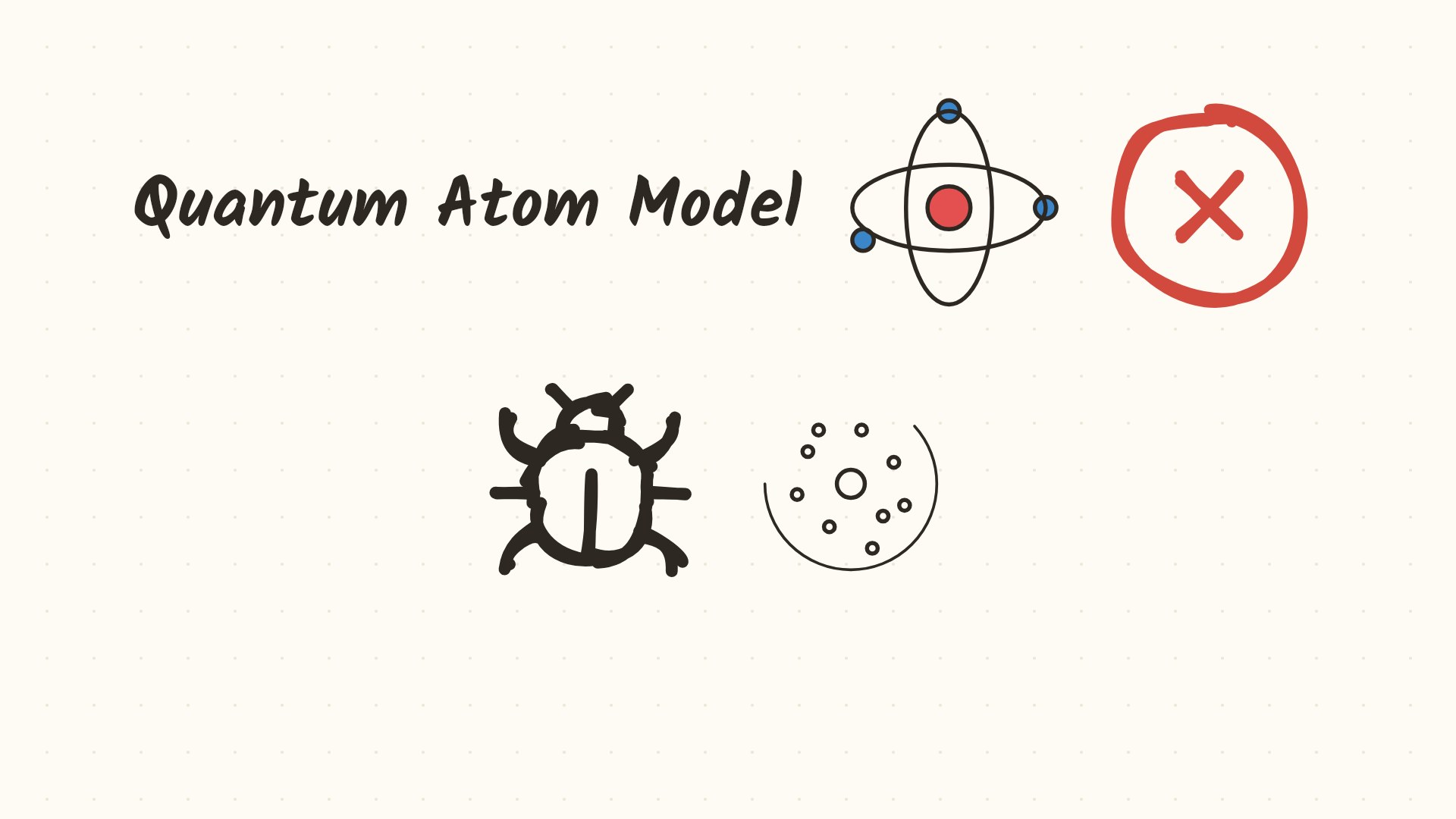
Have you ever tried to guess the exact location of a fast, randomly moving fly in your room? That is exactly how electrons behave. Instead of a fixed track, they form a probability cloud.
To find an electron in this cloud, we use a quantum address. Think of the atom as a quantum hotel. The principal number, n, tells us the floor number. The azimuthal number, l, is the room type.
Now let's look inside the room. The magnetic number, m, tells us the number of beds, drawn as boxes. The spin number, s, is how the guest sleeps: head up, or head down.
Let's write the configuration for oxygen, which has eight guests. We fill the bottom floor first: one s two, then two s two. The remaining four go into the two p room, written as two p four.
Here is a common trap when filling the beds. Never put two arrows in the first box right away! Hund's rule says you must put one up arrow in each box first, and only then pair them up.
Next is electronegativity, which is how strongly an atom pulls shared electrons. Fluorine is like a strong kid pulling a toy. Its nucleus is very close to the outer floor, giving it a maximum pull.
Finally, electron affinity is the energy released when an atom adopts a free electron. If we give chlorine one free electron, it gets very happy and releases a lot of energy to become stable.
To recap, the atom is a layered quantum hotel where electrons spread like a cloud. Knowing their room address helps us predict how fiercely an atom pulls or accepts new electrons!